

How Did Tiny Mammals Survive the Arctic During the Age of Dinosaurs?
What fossil teeth reveal about survival near the North Pole 73 million years ago

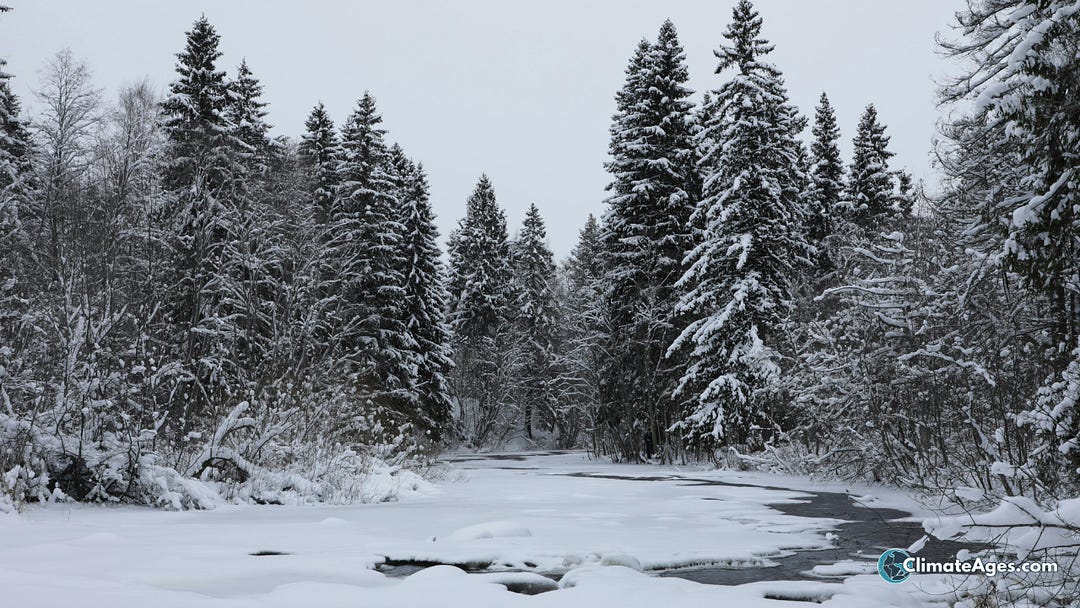
For a long time, scientists treated the Arctic as a kind of evolutionary edge. A difficult place where organisms passed through when conditions allowed it, but not somewhere where major evolutionary stories unfolded.
That idea makes intuitive sense. Even today, Arctic ecosystems are challenging with long winters, months of darkness, short growing seasons, and limited food availability. If you traveled back to the Late Cretaceous, around 73 million years ago, you would still find yourself in a seasonal world with freezing temperatures and long periods without sunlight.
Now imagine living there as a tiny mammal while dinosaurs walked around you.
This is part of why Arctic fossil sites are so important. They force scientists to ask a bigger question than simply “what species lived here?” They ask whether extreme environments can shape evolution in unusual ways.
A new study published in PNAS adds another important piece to that puzzle. Researchers described three new species of multituberculates from northern Alaska, small mammals that lived near the Arctic Circle during the age of dinosaurs. But the real story begins much earlier than the paper itself.
To understand why these fossils matter, we first need to understand what scientists were already trying to figure out.
For decades, paleontologists have known that animals moved between Asia and North America multiple times during the age of dinosaurs. Fossils of dinosaurs, birds, and mammals show surprising similarities on both continents. That immediately raises a question. How did they get there?
Today, we usually think about the Bering Land Bridge when talking about animal migrations between Asia and North America. Humans and Mammoths used it. Wolves, bison, and many other species crossed it too.
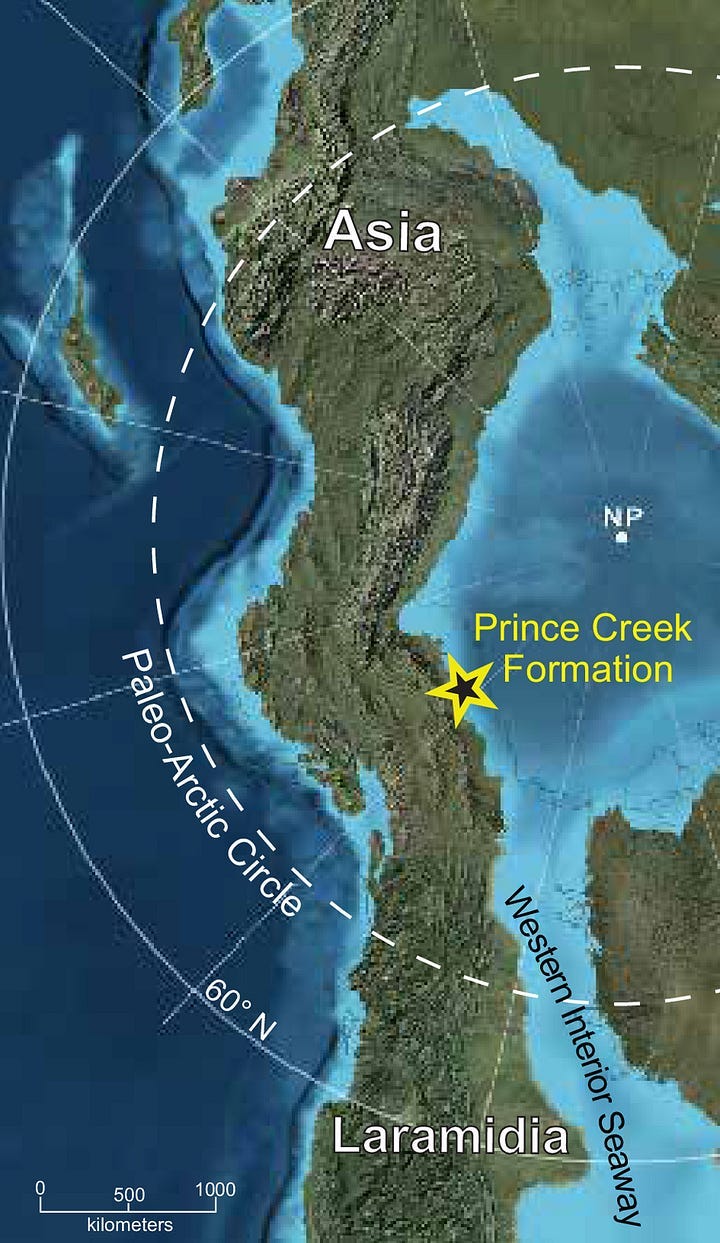
But during the Late Cretaceous, the geography looked very different. There was still a northern connection between Asia and North America, although it formed through different geological processes and connected different ancient landmasses. Scientists have long suspected that this northern corridor allowed animals to disperse between continents tens of millions of years before humans ever existed.
The challenge is that direct evidence is surprisingly hard to find.
When paleontologists discover closely related animals on both continents, they can infer movement happened at some point. But actually catching evidence of those dispersal events in the fossil record is much harder. Fossils are incomplete by nature and entire ecosystems disappear from the record. Small mammals are especially difficult because their fossils are tiny and fragile.
That is one reason why the Prince Creek Formation in northern Alaska has become such an important fossil site.
The fossils there preserve a rare Arctic ecosystem from the Late Cretaceous. Dinosaurs nested there year-round, fish lived in Arctic rivers, birds raised their young in seasonal darkness, and small mammals somehow survived in an environment with freezing winters and months without sunlight.
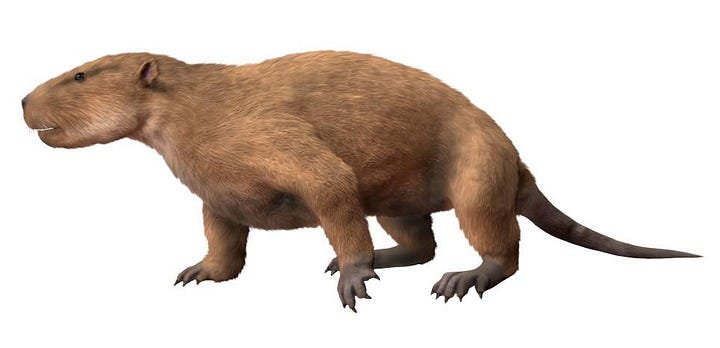
The new study focuses on three newly identified multituberculates. Multituberculates were one of the most successful groups of mammals during the age of dinosaurs. They are sometimes described as “rodent-like,” although they were not rodents; rodents had not evolved yet. Instead, multituberculates independently evolved some similar features, especially specialized teeth adapted for chewing different foods.
Their teeth are actually one of the main reasons scientists can study them so effectively.
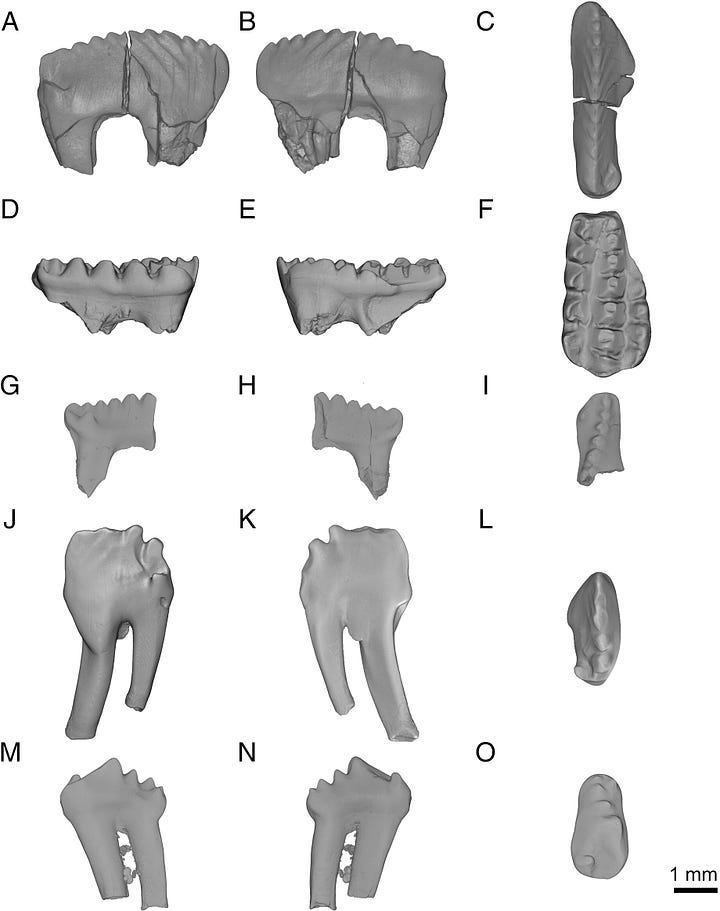
Mammal teeth preserve extremely well as fossils because enamel is very hard and different tooth shapes also reveal clues about diet and ecology. Think about modern mammals. A cat’s teeth are built differently from a deer’s teeth because they process food differently. We use the same logic when studying extinct mammals… It was even the whole topic of my PhD dissertation.
The Alaskan multituberculates showed surprisingly different tooth structures from one another. That suggests they were not all competing for exactly the same resources. Some likely ate more plants while others may have consumed a broader omnivorous diet. In simple terms, even in this harsh Arctic environment, these mammals appear to have occupied different ecological roles. That matters because it tells us the Arctic ecosystem was not barely surviving, it was structured and diverse.
One of the new species, Qayaqgruk peregrinus, may be the most important from a biogeographic perspective. Its closest relatives are multituberculates from Mongolia. That provides some of the clearest direct evidence yet that mammals dispersed between Asia and North America through the Arctic during the Late Cretaceous. In other words, the Arctic was not simply a dead-end environment; it acted as a biological connection between continents.
Another species, Kaniqsiqcosmodon polaris, tells a slightly different story. It appears to represent the oldest known member of a mammal lineage that later became more widespread after the asteroid impact that ended the age of dinosaurs.
This is where the Arctic becomes especially interesting.
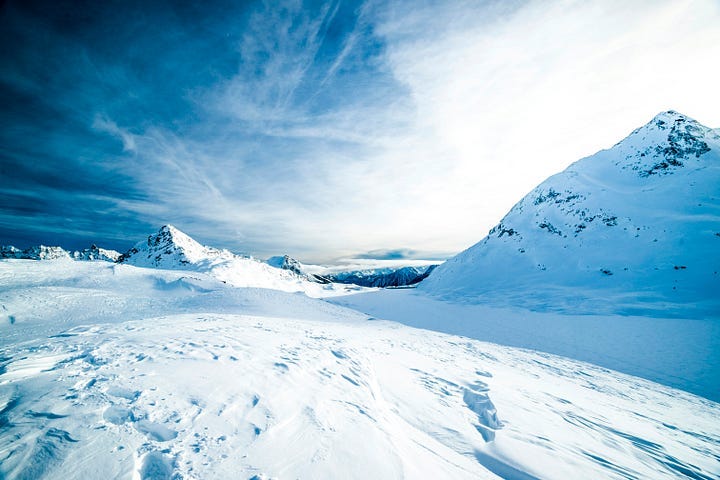
Scientists have increasingly started questioning whether extreme environments sometimes prepare organisms for major environmental disruptions. Species already adapted to seasonal scarcity, cold temperatures, or unstable conditions may possess traits that become useful during periods of planetary change.
The authors are careful not to overstate this idea, and the evidence remains limited. But the possibility is worth exploring because multituberculates were among the mammals that successfully survived the mass extinction that killed non-avian dinosaurs.
That survival was not random. Some traits helped certain organisms make it through while others disappeared.
The Arctic fossils also help scientists rethink how ecosystems function during periods of environmental stress. Modern conservation biology often focuses on tropical forests or coral reefs because they contain extraordinary biodiversity. But extreme ecosystems matter too. They can shape resilience, adaptation, and evolutionary experimentation in ways we are still trying to understand.
You can even see echoes of that today.
Modern Arctic animals survive through a combination of behavioral flexibility and seasonal adaptation. Some hibernate, some cache food, some reduce activity during winter months, and others remain active year-round despite severe conditions. The ancient mammals from Alaska likely used their own strategies to survive long periods of darkness and food limitation, although scientists still need more evidence to determine exactly how they did it.
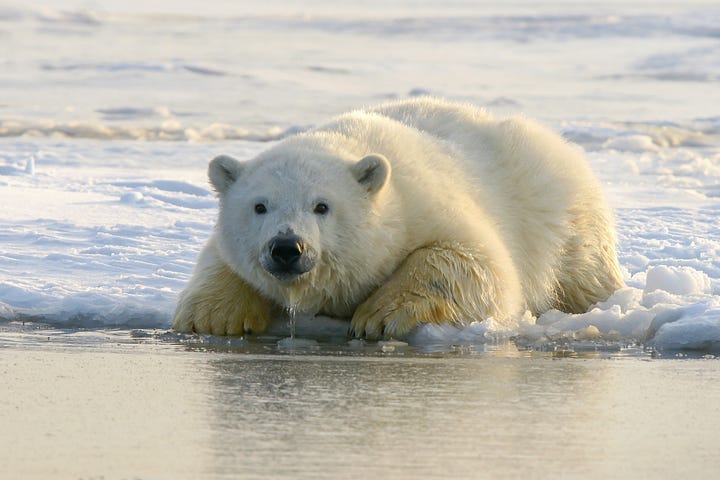
What makes this story especially valuable today is that it expands our understanding of how life responds to environmental change over long timescales.
Climate discussions often focus only on the immediate future, which is understandable because those impacts affect real people and ecosystems right now. But fossils add another layer to the conversation. They show that ecosystems are dynamic systems shaped by movement, adaptation, extinction, and survival across millions of years.
The Arctic itself has repeatedly transformed throughout Earth’s history. Forests once grew there, dinosaurs nested there, and small mammals diversified there.
That perspective does not make modern environmental challenges less important. If anything, it helps explain why studying ancient ecosystems matters so much. Fossils are not just records of extinction; they are records of biological problem-solving.
And sometimes, the smallest fossils tell the biggest stories.
Climate Ages has officially become a Substack Bestseller, and it’s thanks to a community of subscribers who believe science writing should stay careful, clear, and accessible.
If you enjoy my work and want to help me keep these stories free for everyone, I’d appreciate your support at any level that feels comfortable:
💡 $1/month or $10/year – A small boost with a big impact.
🌱 $2/month or $20/year – Supporting science communication.
🔬 $3/month or $30/year – Investing in evidence-based insights.
🌍 $4/month or $40/year – Expanding science for everyone.
🚀 $5/month or $50/year – Powering independent science writing.
Every contribution helps me continue creating content that makes science accessible, engaging, and impactful.
With Love,
Silvia P-M, PhD — Climate Ages
P.S. I have exciting news!
I recently launched a second newsletter, The Natural Scientist, focused on careers, purpose, and life in the natural sciences.
If you work in fields like paleontology, ecology, evolution, conservation, museums, or science communication, or know someone who does, feel free to join or share it.
I’ll be covering career paths, interviews, practical advice, and reflections on building a meaningful life around science.

Fascinating. I thought I was pretty well versed in continental drift and the role it played in evolution, but you showed a whole new dimension...as well as how limited my knowledge actually is.